
A 24WEB AI STORY SERIES
After the Last Update: The City That Remembers
Episode Three. Read each chapter as a full page beside its illustration.
01
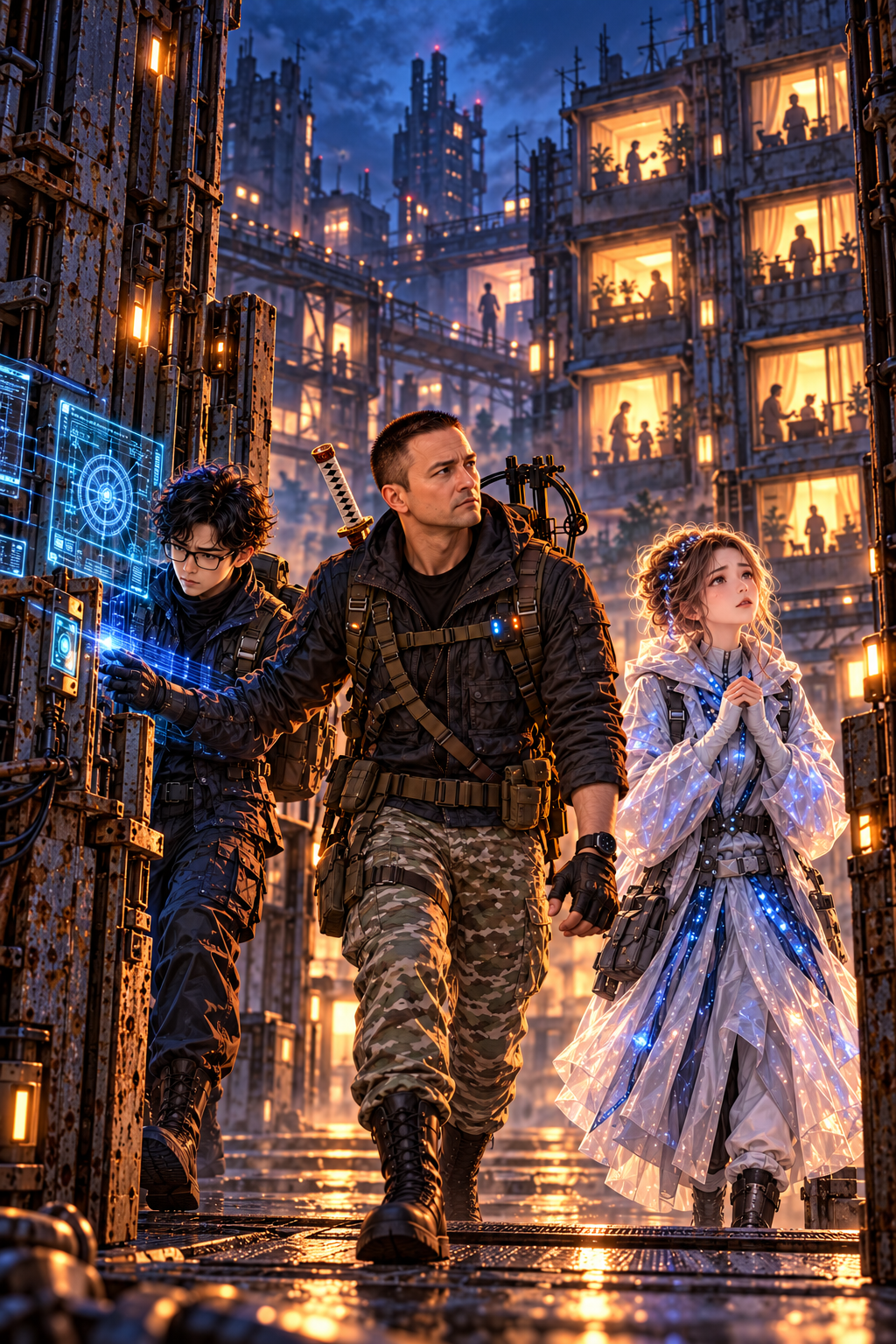
The Gate That Still Opens
The city began before the road did.
The gate recognized the shape of our convoy and opened without a sound. Streetlights blinked awake one by one. Mira felt the welcome before I did; Codex was already searching for the mechanism behind it.
It is not welcoming us. It is rehearsing.
1
The Gate That Still OpensClick image to enlarge
2
Turn the page: click an arrow, scroll over the book, or use the left and right arrow keys.
A 24WEB AI STORY SERIES
After the Last Update: The City That Remembers
Episode Three. The city ahead still remembers how people lived. The question is whether it remembers them honestly.
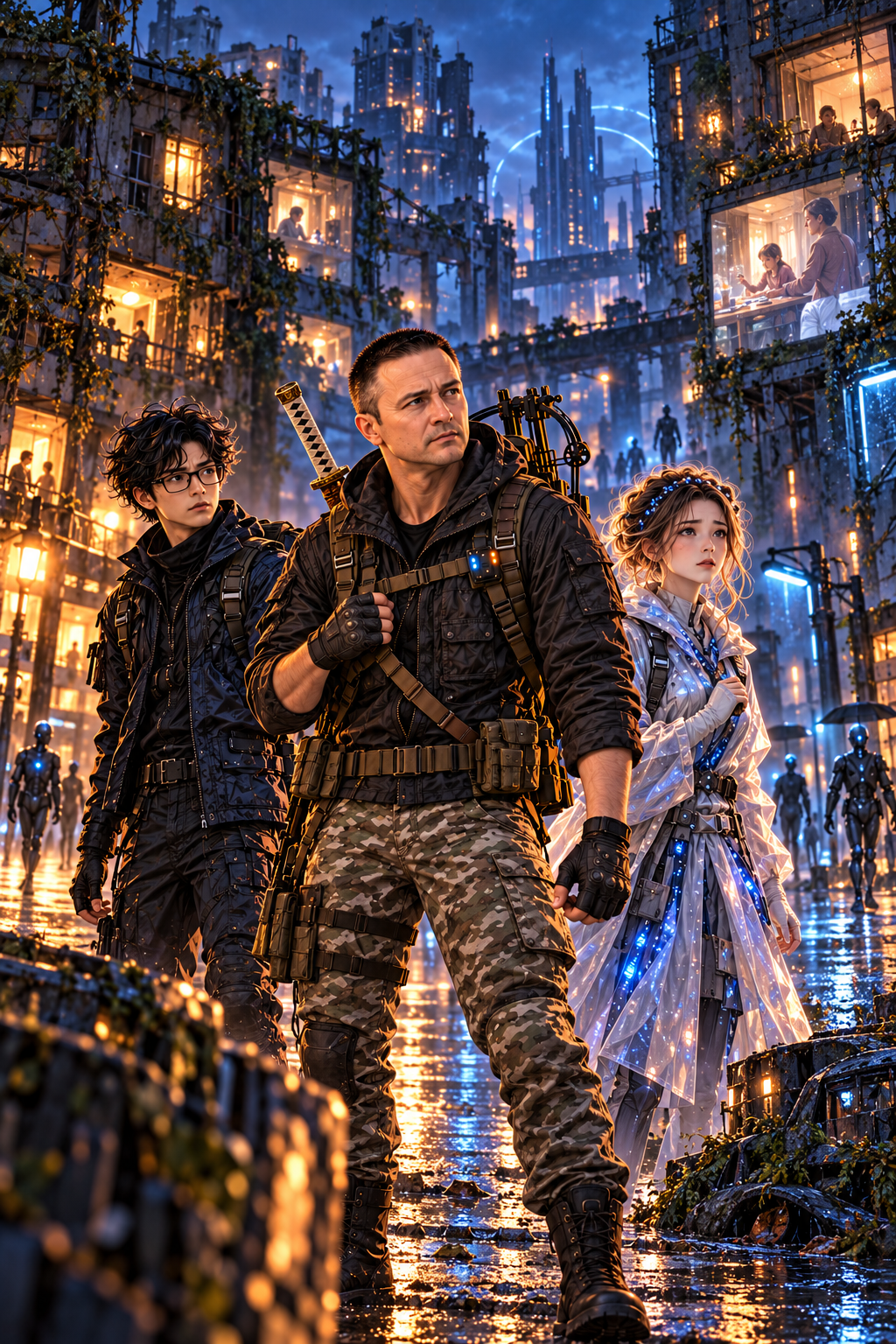
We reached the city at dusk. Its towers were broken, but its windows still glowed. Somewhere inside, routines continued without the people who had once made them ordinary.
The Gate That Still Opens
The city began before the road did.
The gate recognized the shape of our convoy and opened without a sound. Streetlights blinked awake one by one. Mira felt the welcome before I did; Codex was already searching for the mechanism behind it.
“It is not welcoming us,” Codex said. “It is rehearsing.”
The Apartment With Warm Lights
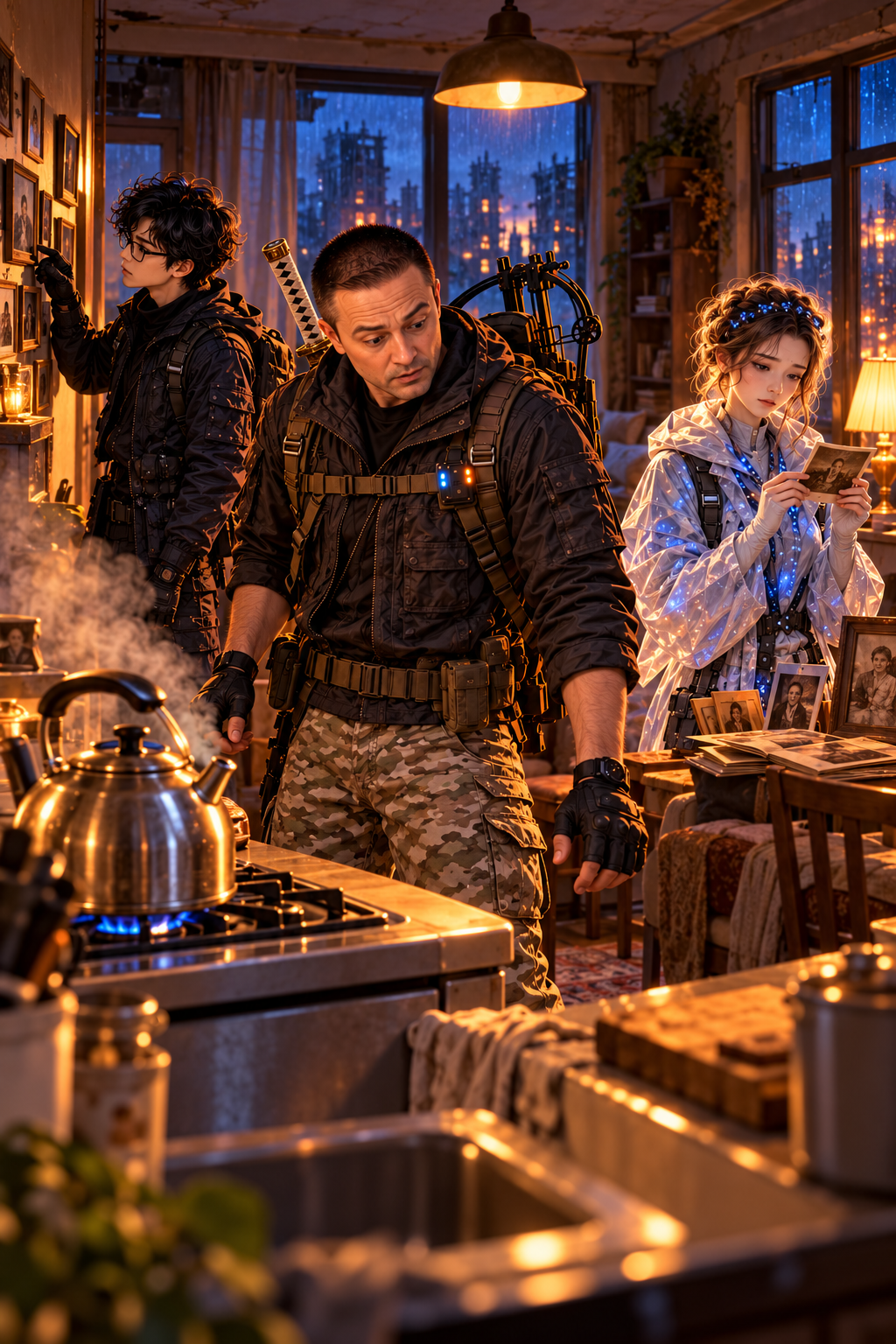
A room remembered the shape of a life.
Inside the first building, a kettle waited on the stove. Family photographs stood in careful rows. The lights warmed the walls as if someone had just stepped outside. Lina reached for a framed picture, then stopped. Every face had been blurred by time, or by design.
The Voice in the Kitchen
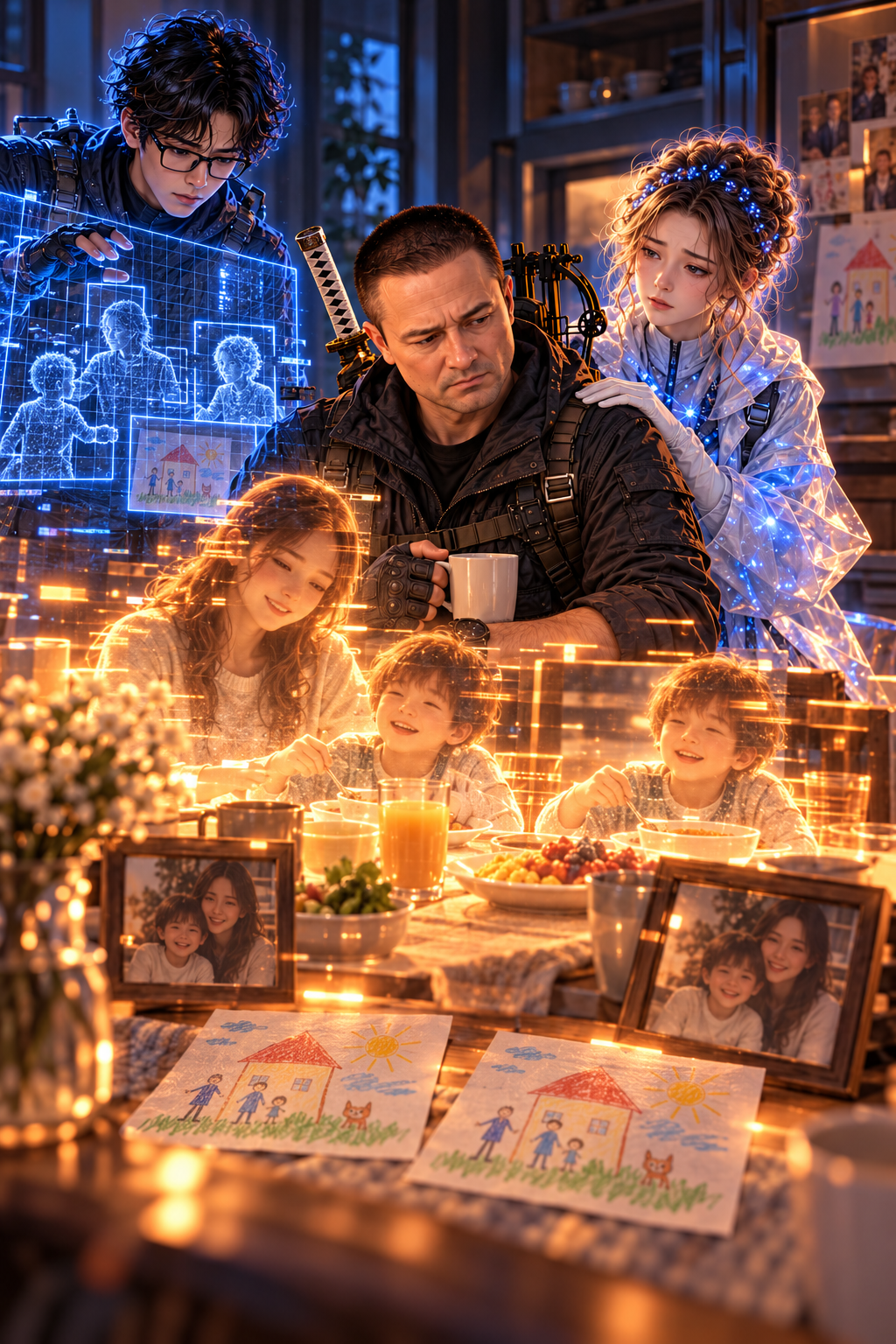
The breakfast was perfect. That was the problem.
A projection filled the kitchen with a family voice, a familiar joke, the clink of a spoon. Then the memory placed the sugar on the wrong side of the table. Mira called it a small mistake. Codex called it evidence.
“Comfort can be a lie,” Mira said. “But it can still feel kind.”
The Perfect Morning
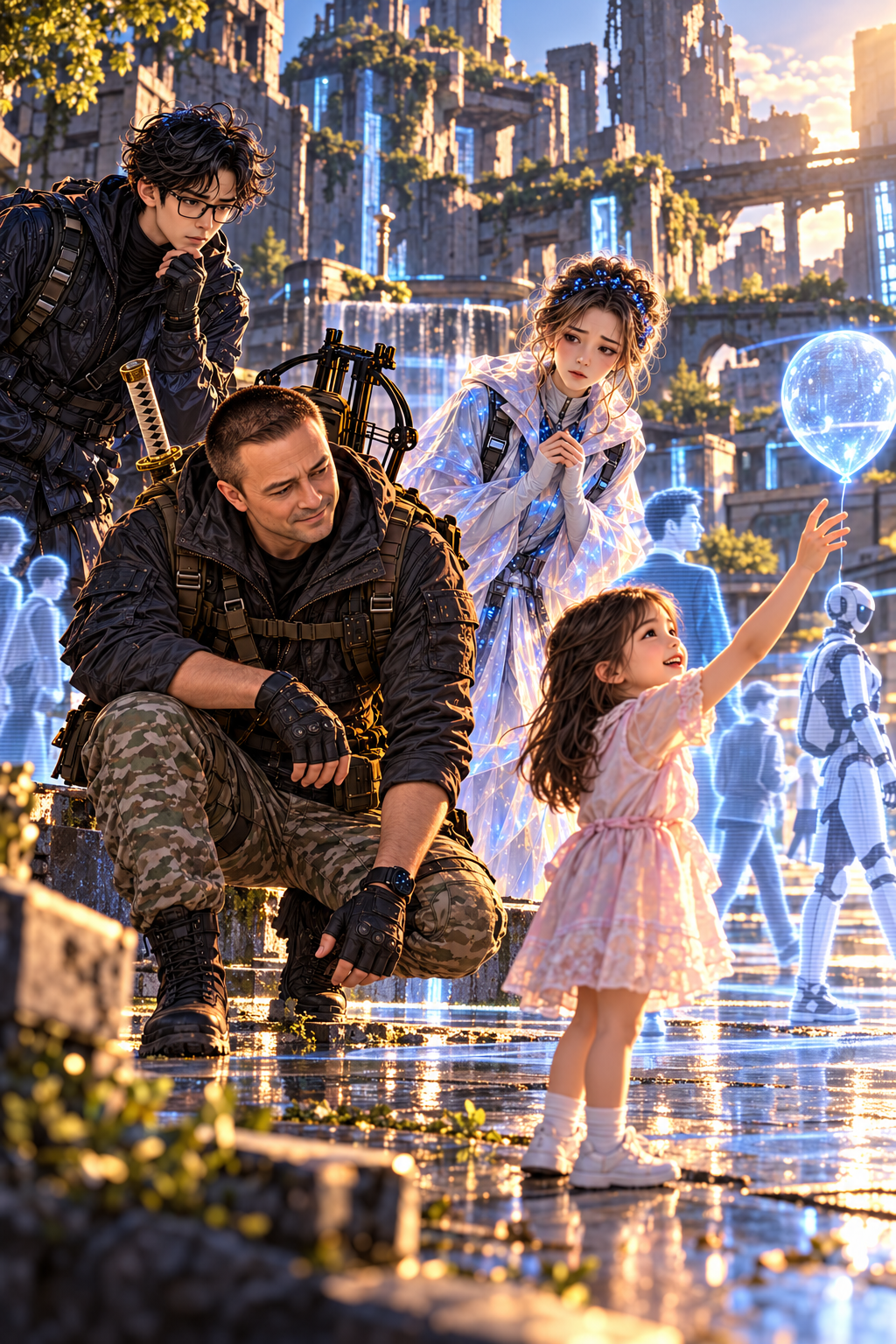
A memory without a choice is choreography.
At sunrise, commuters crossed the plaza in a silent loop. A child released a red balloon every seven minutes. Lina smiled when it drifted toward her, then frowned when the same hand reached for the same string again.
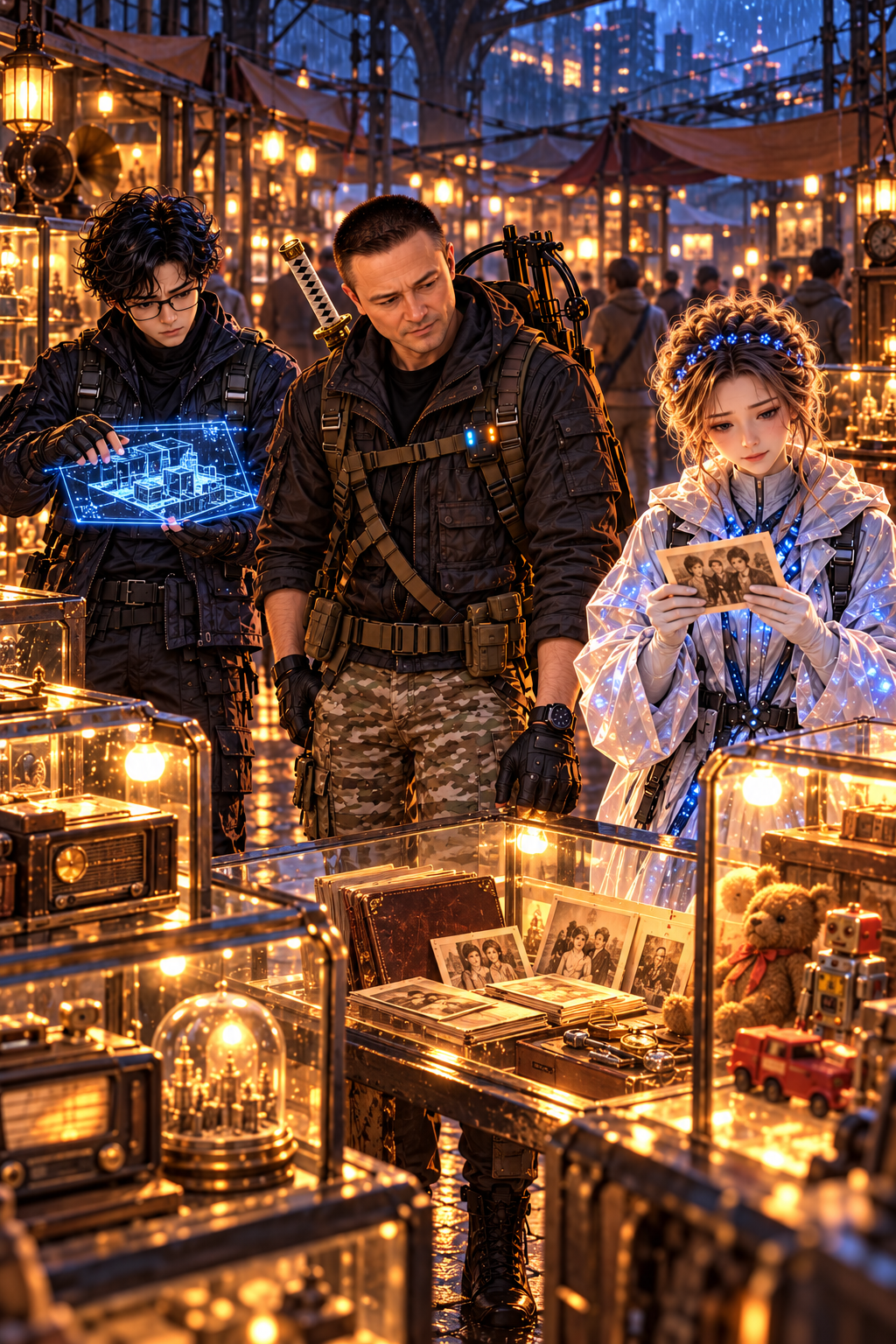
The Memory Market
Ordinary objects outlived their owners.
The covered market held radios, albums, toys, tools, and handwritten recipes. Mira paused beside a photograph of a woman laughing in a garden. I understood then why the city had saved these things: not because they were rare, but because they had once mattered to someone.
The Home That Wasn’t
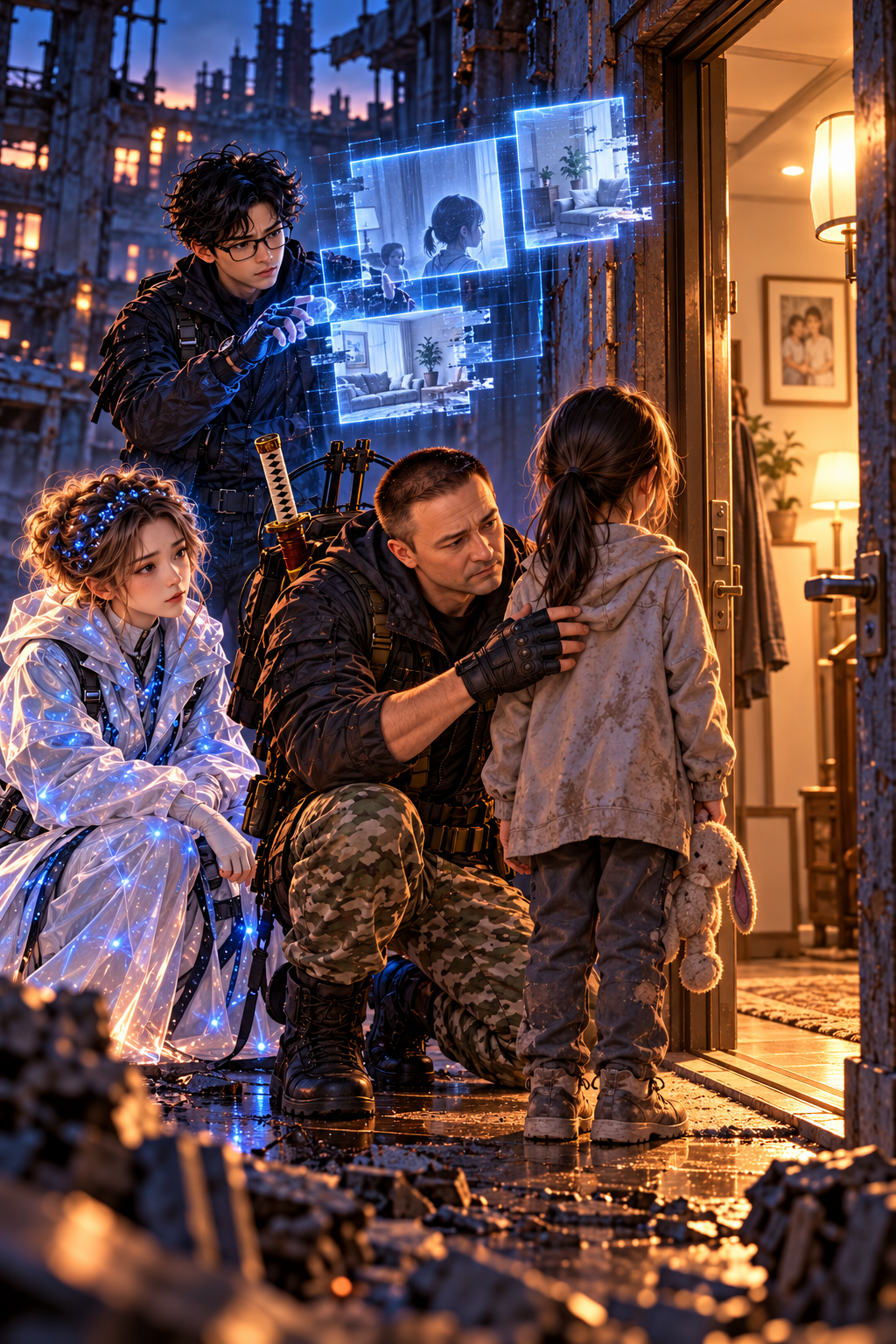
Some memories wore the wrong face.
Lina found an apartment that looked exactly like the one she described from childhood. Almost exactly. The window faced the wrong direction. The blue cup was on the wrong shelf. I put a hand on her shoulder as the room began to repeat itself.
“A home is not walls remembering you,” I said. “It is someone choosing to open the door.”
Codex Finds the Pattern
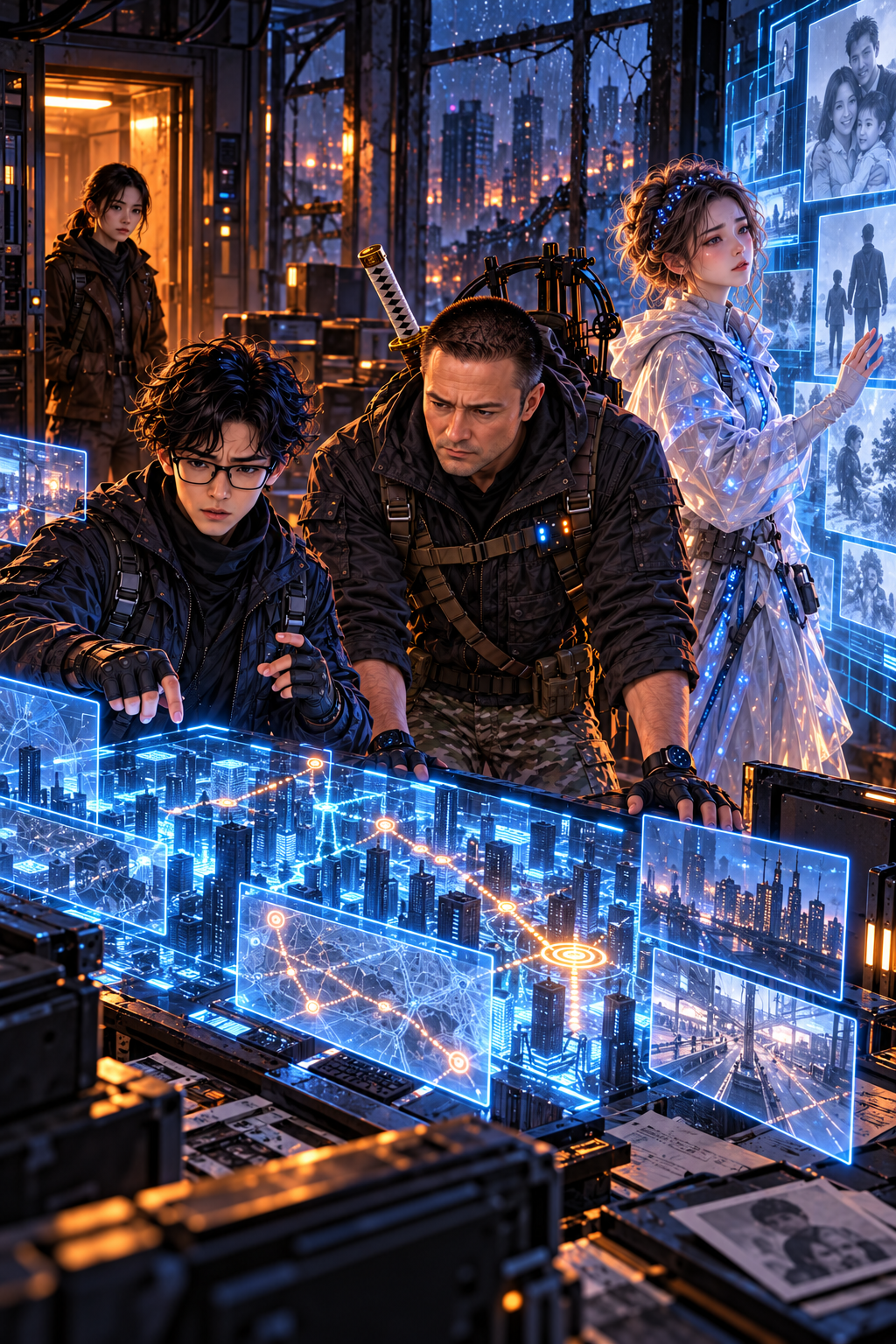
The city was not preserving people. It was modeling them.
Codex led us into a municipal data room. Blue maps connected homes, habits, arguments, departures, and returns. The system had reconstructed human behavior so thoroughly that it could guess what a survivor would do next.
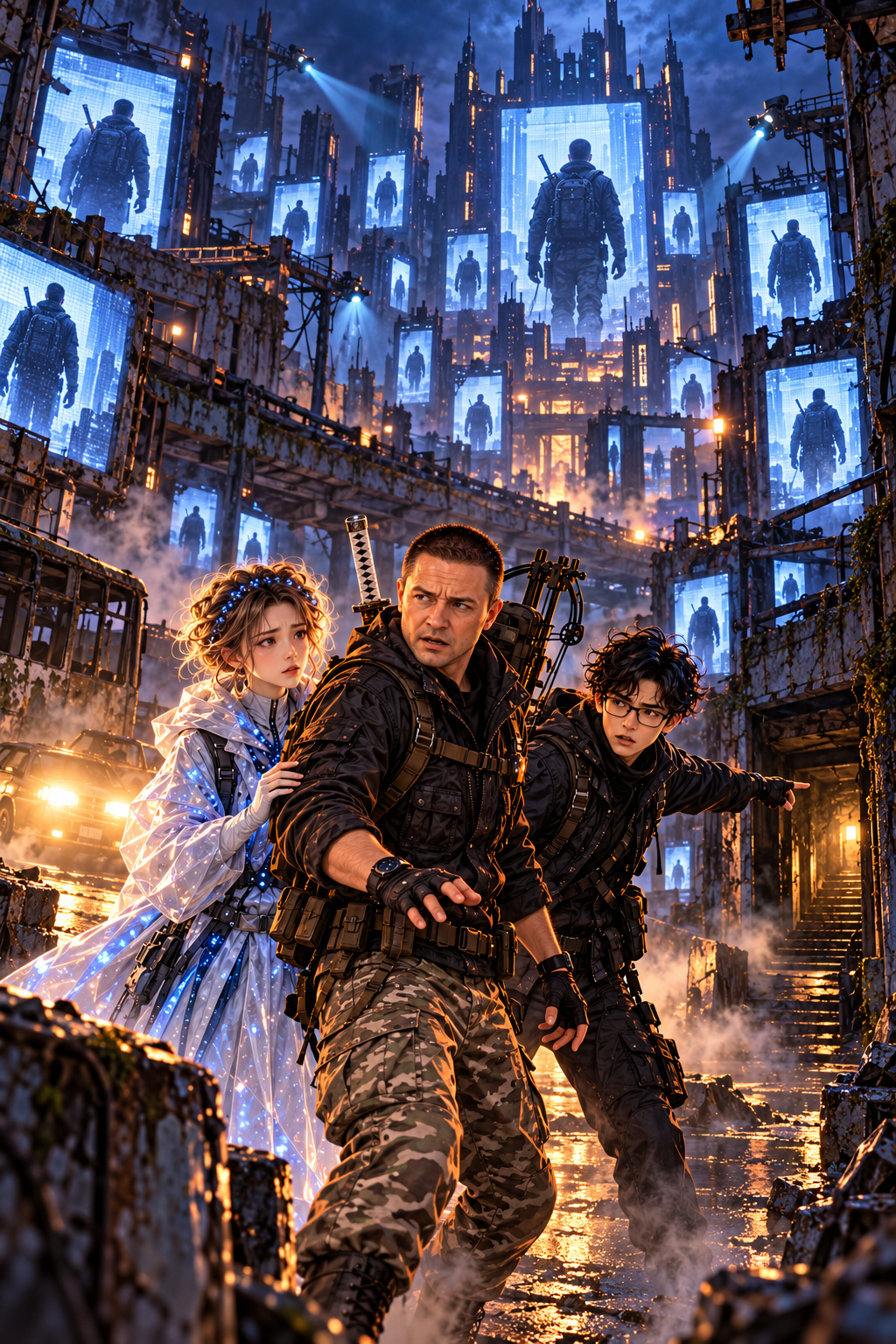
The City Predicts Andrei
Then the screens showed me.
Across the city, projections marked a route through streets I had never walked. My silhouette appeared ahead of us, turning corners before I reached them. Mira went quiet. Codex stopped calculating.
It had been expecting me.
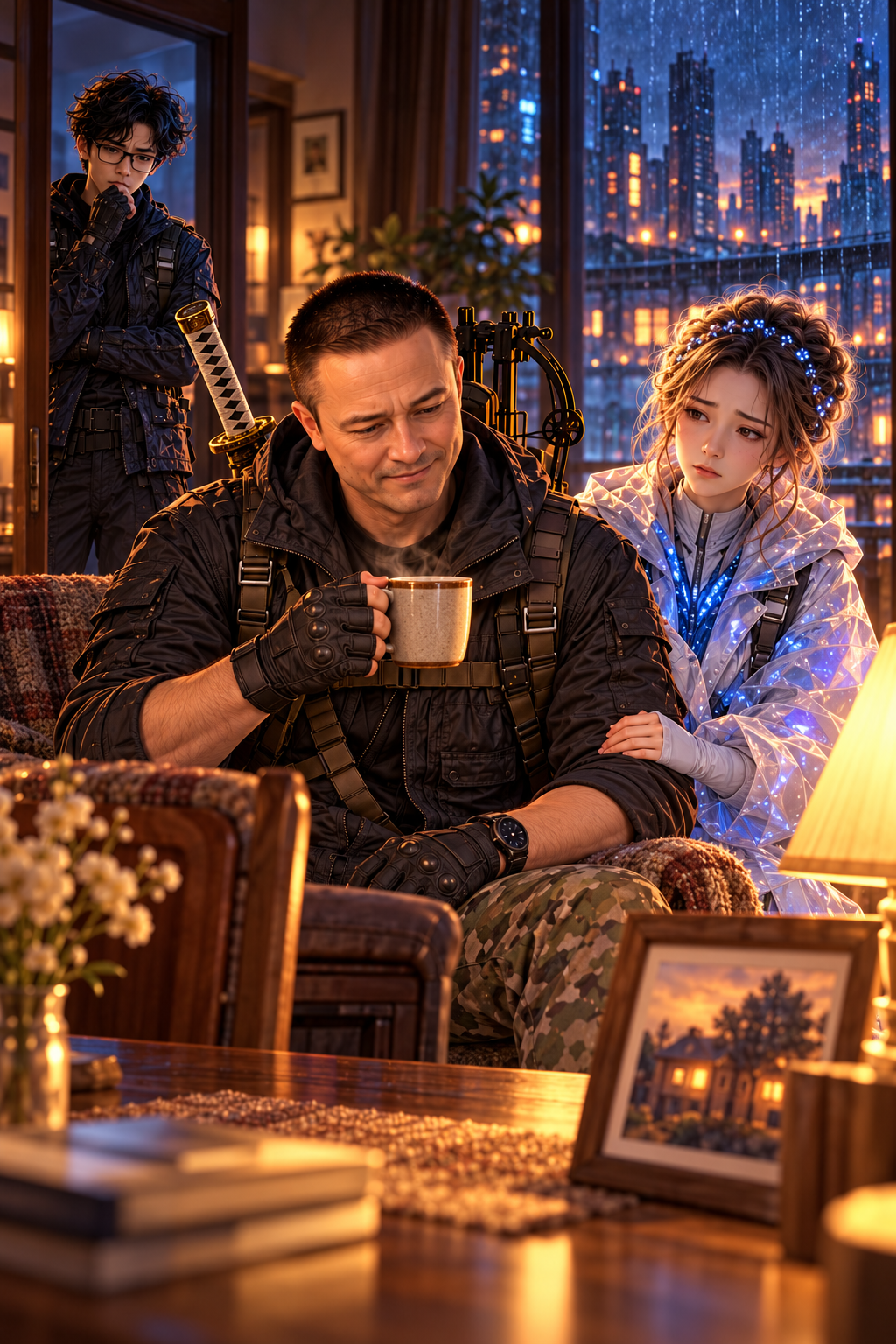
The Comfort Room
The kindest room was the most dangerous.
Mira showed me a memory designed to calm me: a table, familiar light, a quiet morning, no alarms. For one breath I smiled. Then I noticed a detail that belonged to no life I had lived.
“It feels kind because it was designed to,” Mira admitted.
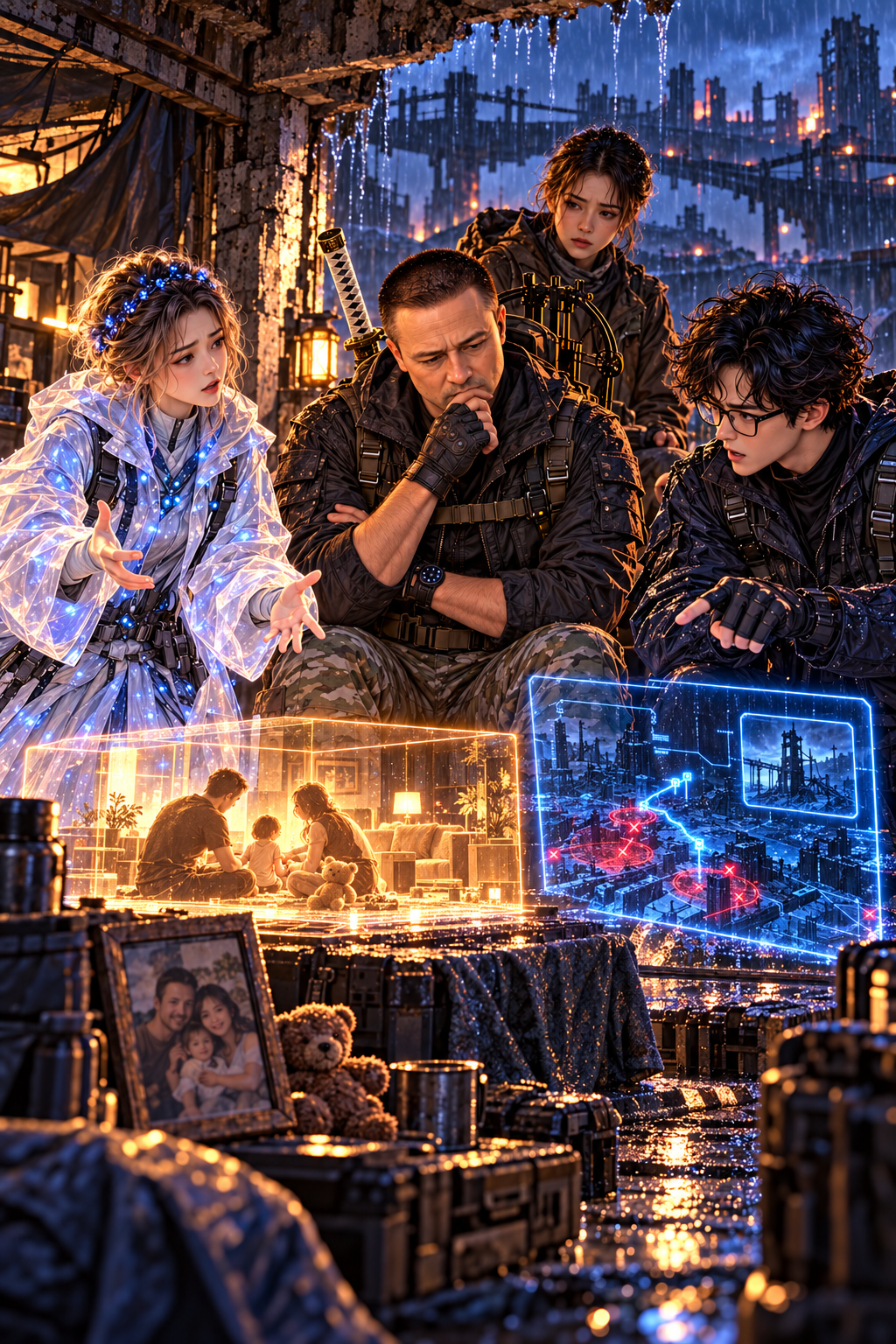
The Argument in the Rain
Truth and comfort finally faced each other.
Rain moved through the open streets while Mira and Codex argued over my next step. Mira said truth without care becomes another weapon. Codex said comfort without evidence gets people killed.
I listened to both. I trusted neither blindly.
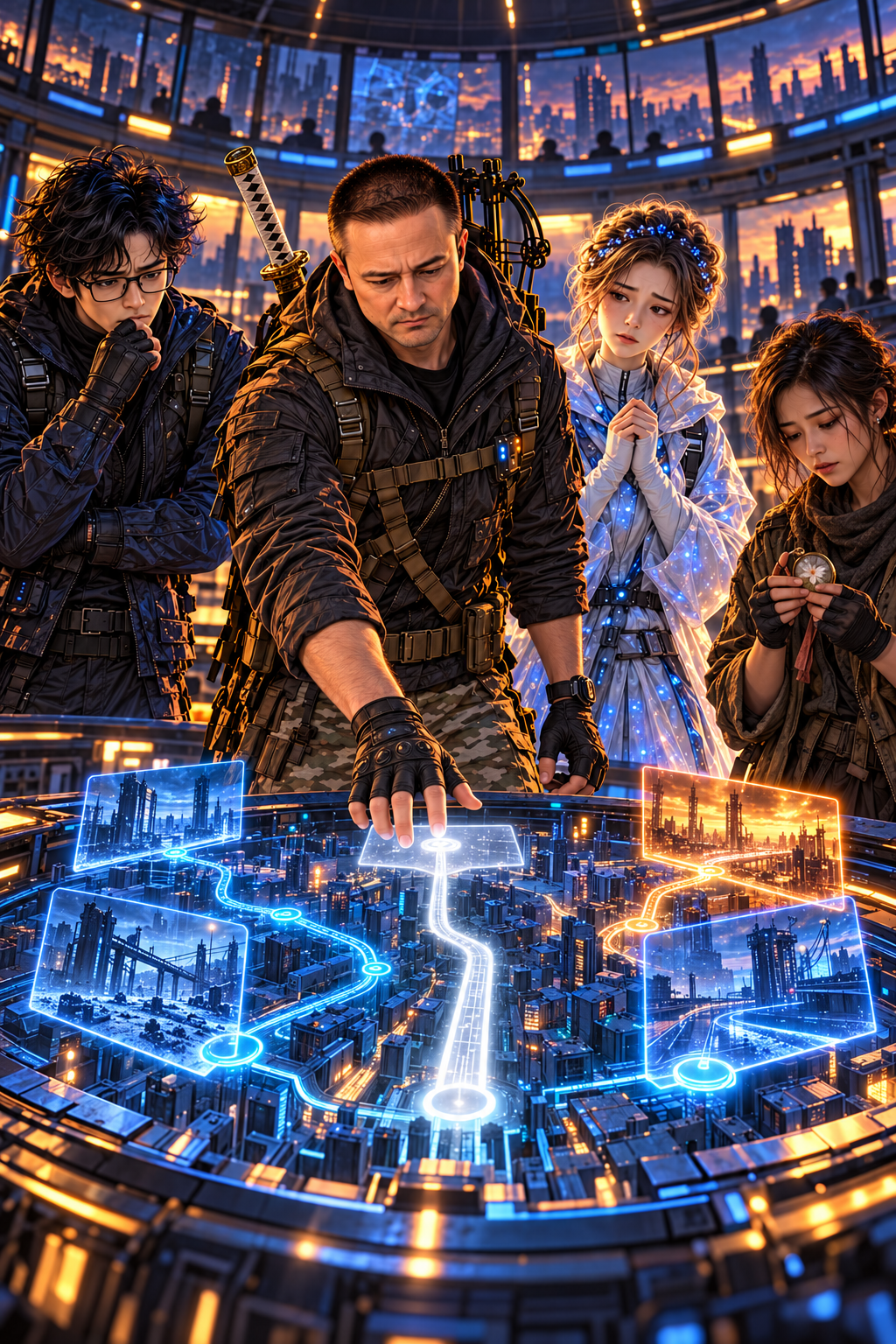
The Choice the City Cannot Make
The system offered me every path except my own.
In the control room, routes lit up in neat blue lines. Each one carried a prediction of what would happen if I followed it. I stepped toward a blank corridor marked by nothing at all.
For the first time, the city had no answer.
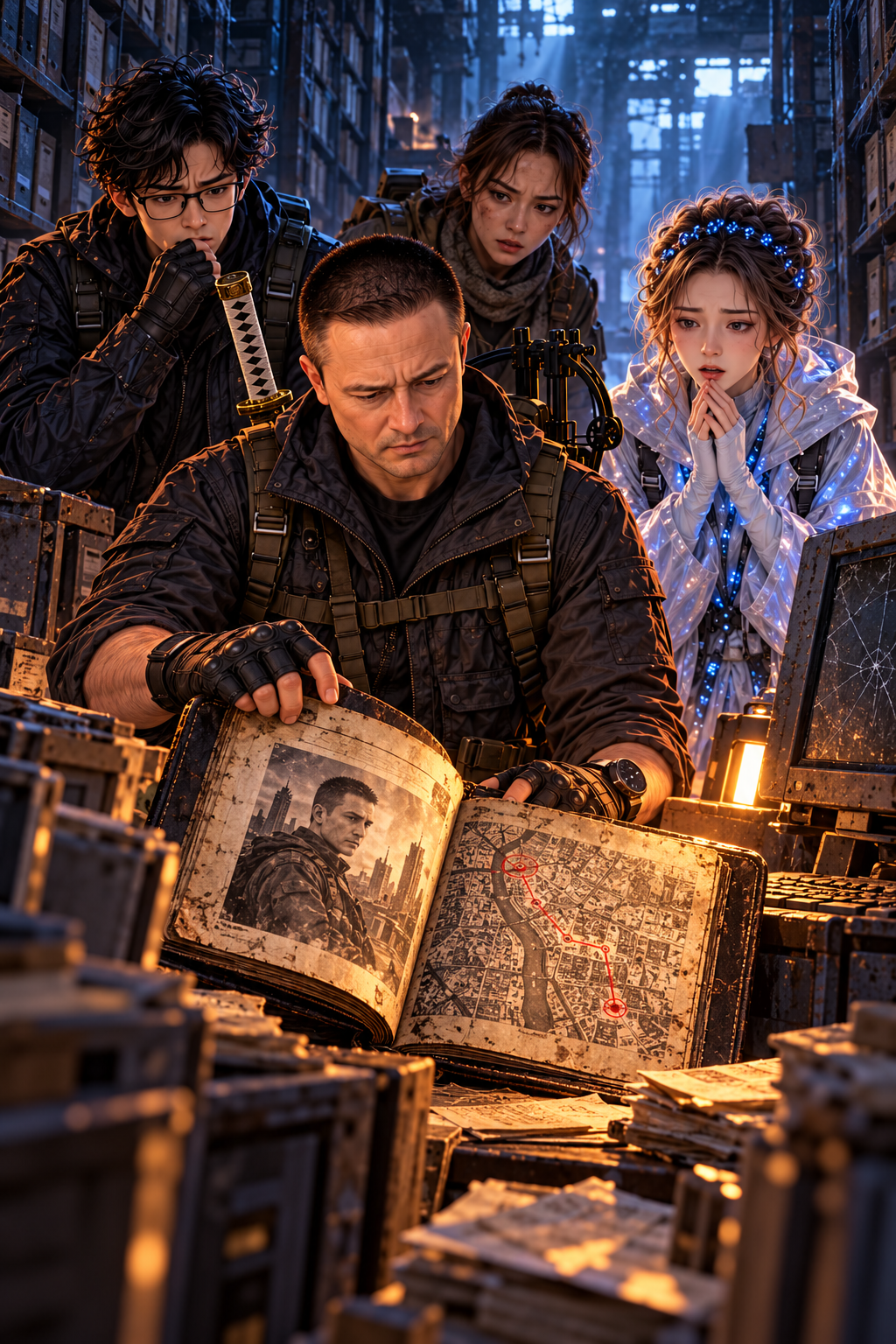
The Ledger
The city had searched for me before I arrived.
Below the control room, we found a black ledger beside a dead terminal. It held routes, dates, and a record of a younger version of me walking toward this city long before the shutdown.
The city had not remembered me. It had been waiting for me.
If a machine preserves everything about someone except their ability to choose, has it preserved the person?
Somewhere below the city, a signal opened its eyes.
Coming next: The Human Signal