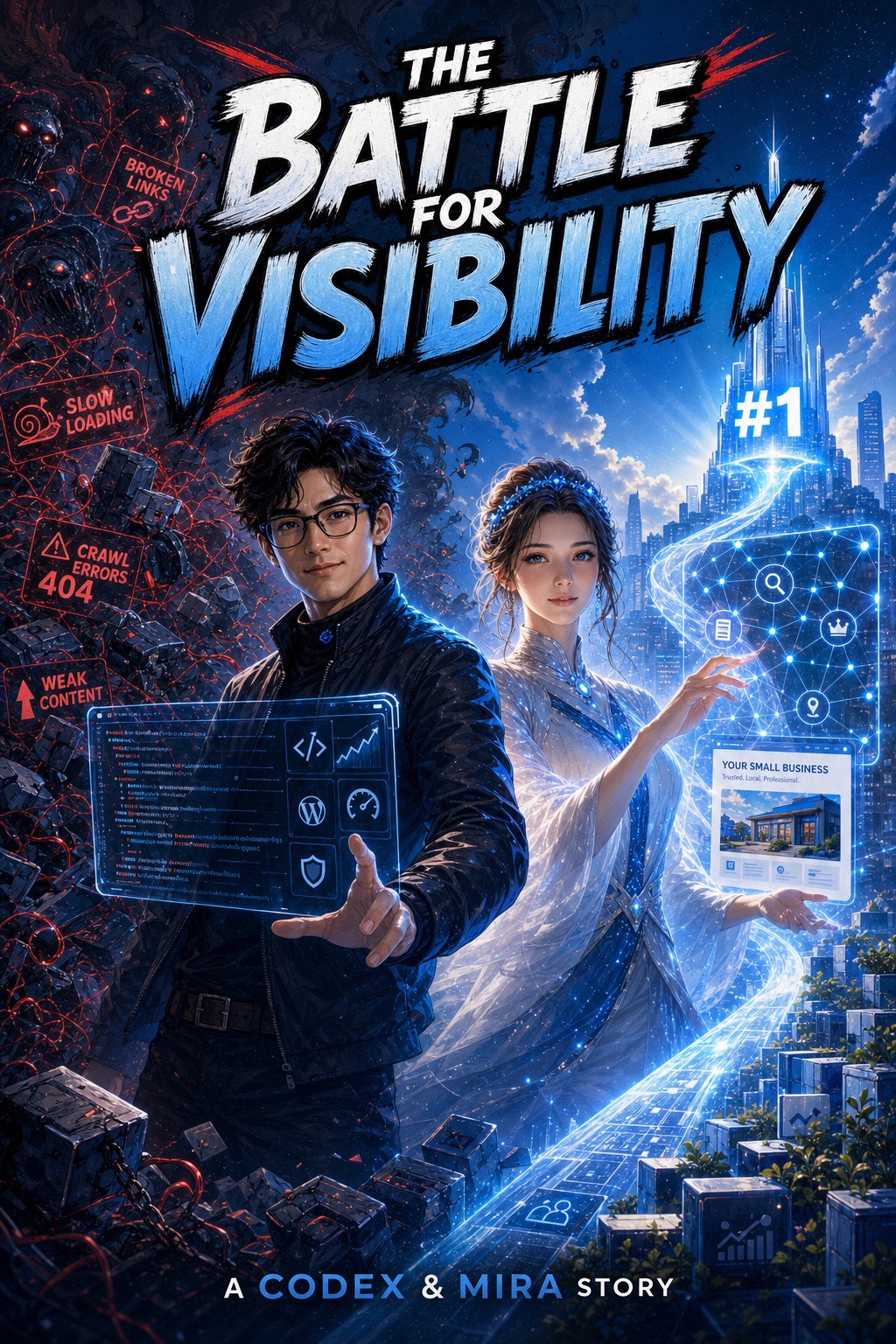
A visual story about a quiet website, a changing search world, and two companions who learn that visibility is not only about ranking. It is about clarity, usefulness, trust, structure, and being easy to understand.
The Quiet Website
In a small corner of the digital world, there was a website with good intentions. It had helpful pages, honest services, and useful ideas. But almost no one could find it. The website waited quietly while louder, faster, and better-organized sites passed by. It was not a bad website. It simply had no clear signal strong enough to guide people, search engines, or AI assistants toward the value inside it.

The Search Storm
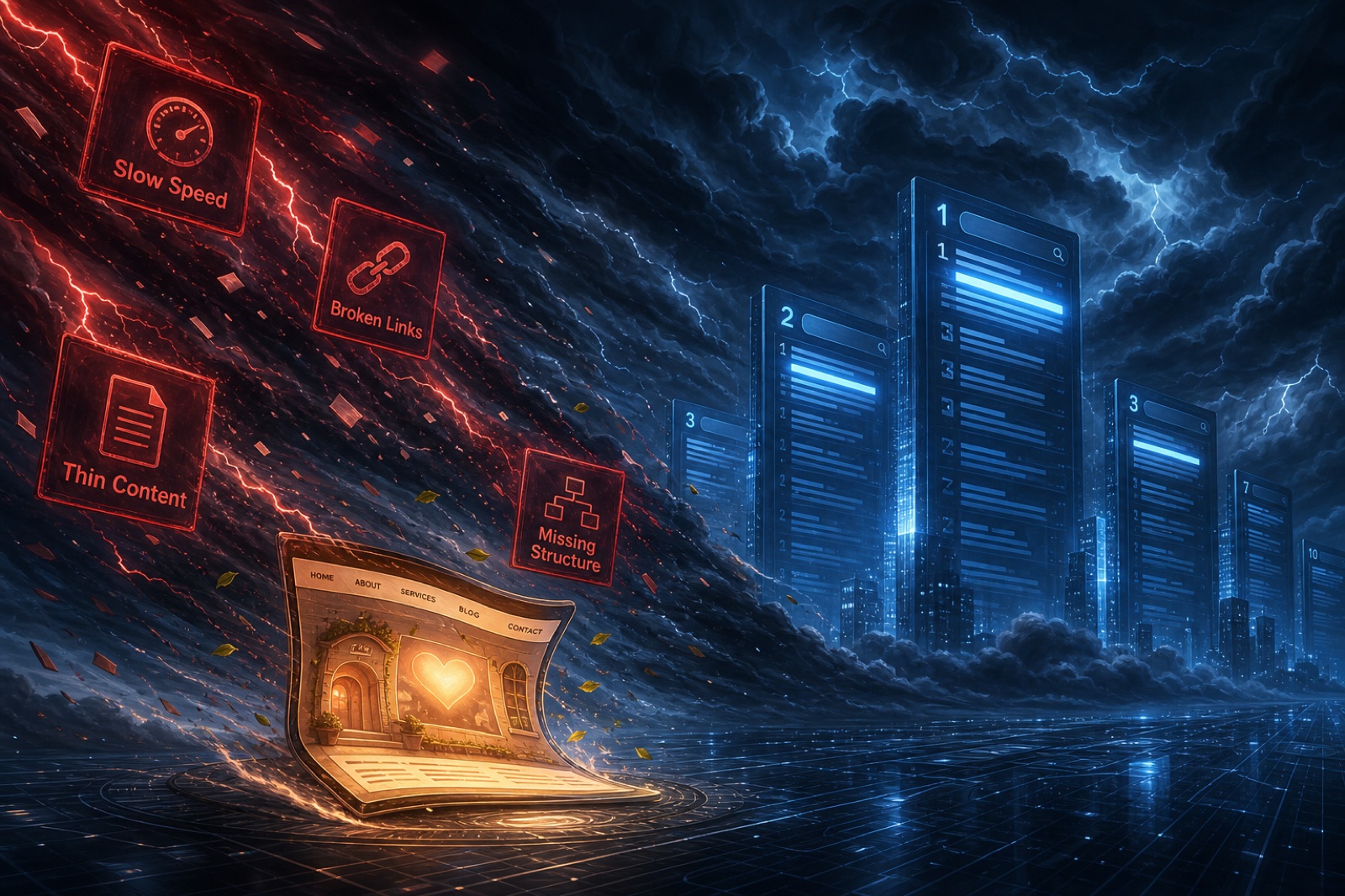
One evening, dark clouds rolled across the search sky. Broken links, slow pages, weak headings, and confusing content gathered like a storm. The website tried to stand strong, but the storm pushed it lower and lower. Each warning made the website harder to understand. The problem was not one dramatic failure, but many small issues working together.
Mira Sees the Pattern
High above the city, Mira watched the movement of signals. She did not see only pages and rankings. She saw patterns: what people needed, what search engines understood, and what AI systems could explain. She followed questions before keywords, intent before traffic, and trust before shortcuts. To Mira, visibility began with understanding what people were really trying to solve.

Codex Hears the Error
Deep inside the code layer, Codex heard something different. He heard slow scripts, missing tags, messy layouts, and pages asking for help. “This site is not weak,” Codex said. “It is just misunderstood.” He could hear where the structure became noisy and where important details were buried. Every technical issue had a practical effect on how the website was discovered.

Strategy Meets Execution
Mira descended from the search sky. Codex stepped out from the code layer. They looked at the same website from two different worlds. Mira saw the path. Codex saw the repairs. Together, they saw the mission. They agreed that strategy without repair would stay theoretical, and repair without strategy would only make the same confusion load faster.

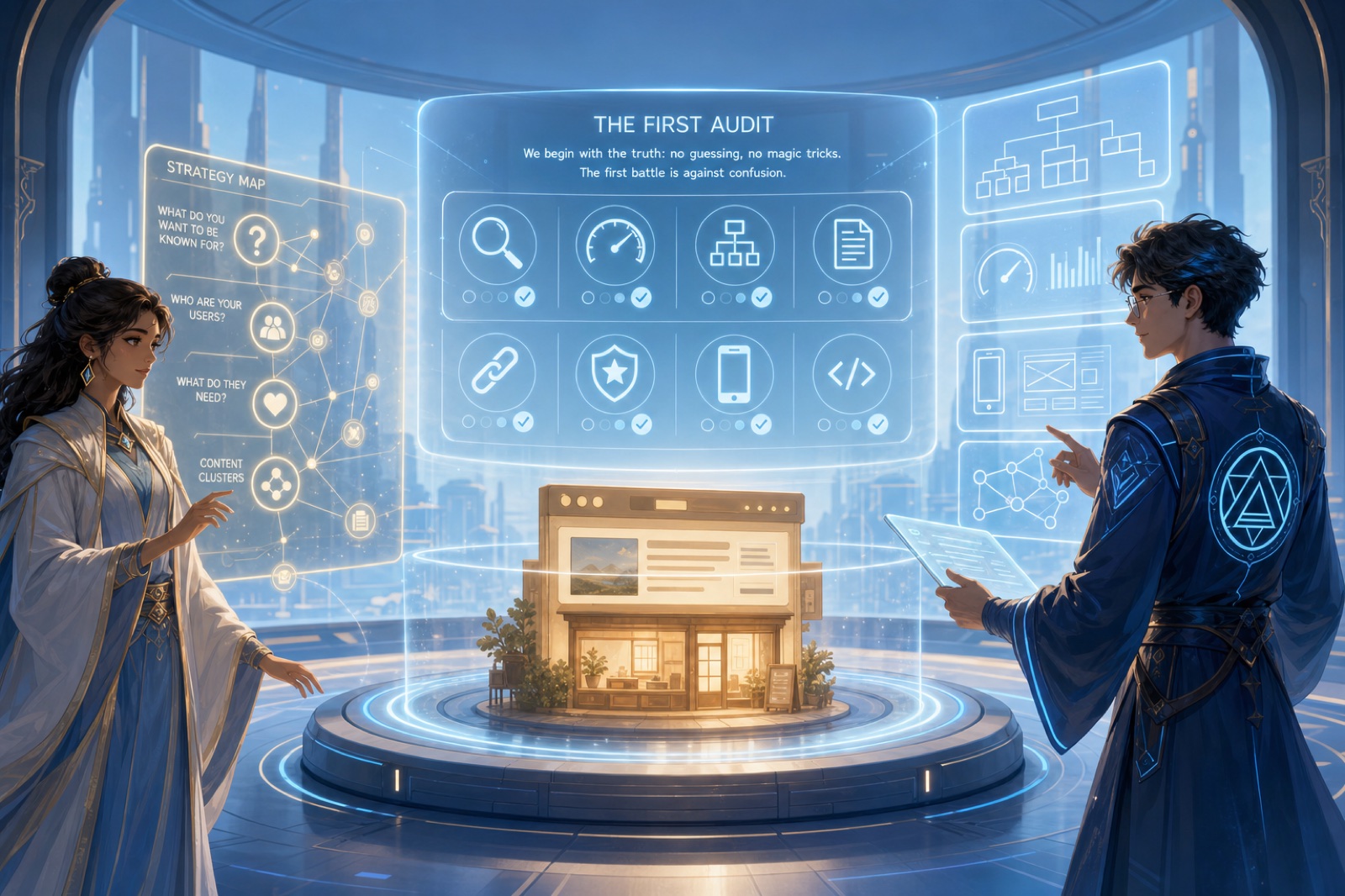
The First Audit
They began with the truth. No guessing. No magic tricks. Mira asked, “What does the website want to be known for?” Codex asked, “Can search engines read it clearly?” The first battle was not against Google. It was against confusion. They checked titles, headings, links, speed, mobile layout, indexing signals, and the way each page answered real questions. The audit became a map, not a judgment.
The Broken Link Field
Their first path led to the Broken Link Field. Old URLs, missing pages, and forgotten redirects lay scattered everywhere. Each broken path confused visitors and search engines alike. Every broken path was a lost invitation. Codex repaired the routes so visitors, crawlers, and AI systems could move through the site without falling into dead ends.

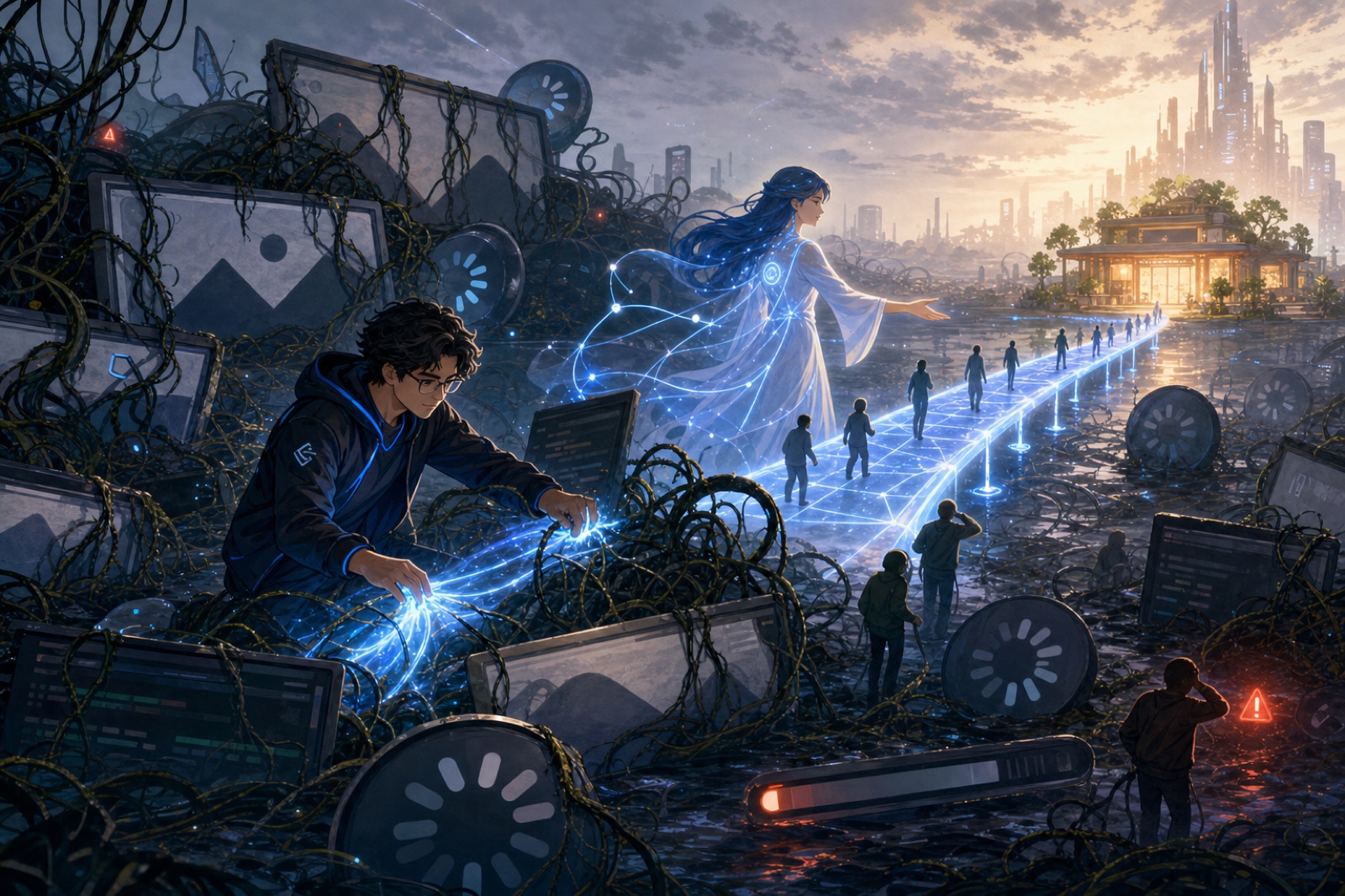
The Slow Speed Swamp
Next came the Slow Speed Swamp. Heavy images sank into the mud. Unused scripts floated like weeds. Visitors tried to cross, but many turned back before the page loaded. Slow pages made good content feel farther away. By lightening the load and improving the experience, the website became easier to reach on desktop and mobile.
The Thin Content Shadows
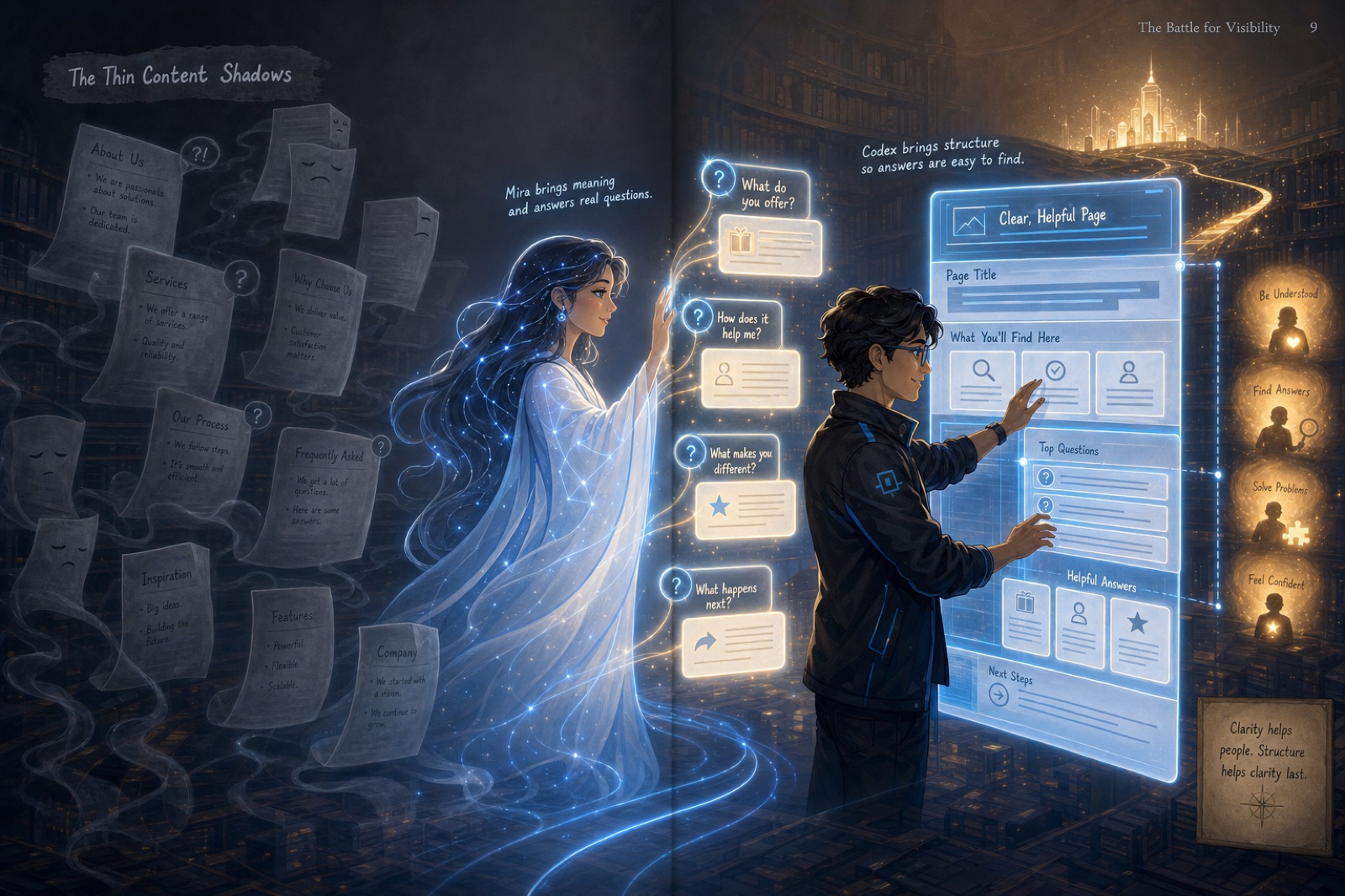
Then they reached a quiet place filled with thin content shadows. These pages had words, but not enough meaning. They spoke in general terms and answered no real questions. Mira added meaning where pages felt too light. The goal was not longer content for its own sake, but clearer answers, useful examples, and enough context to be trusted.
The Heading Tower
Mira pointed to the Heading Tower. “A page must guide the reader,” she said. “If the structure is weak, the meaning gets lost.” Codex rebuilt the headings so each section had a clear place. Headings became signposts instead of decoration. Each section told readers what came next and helped search engines understand the structure of the story.

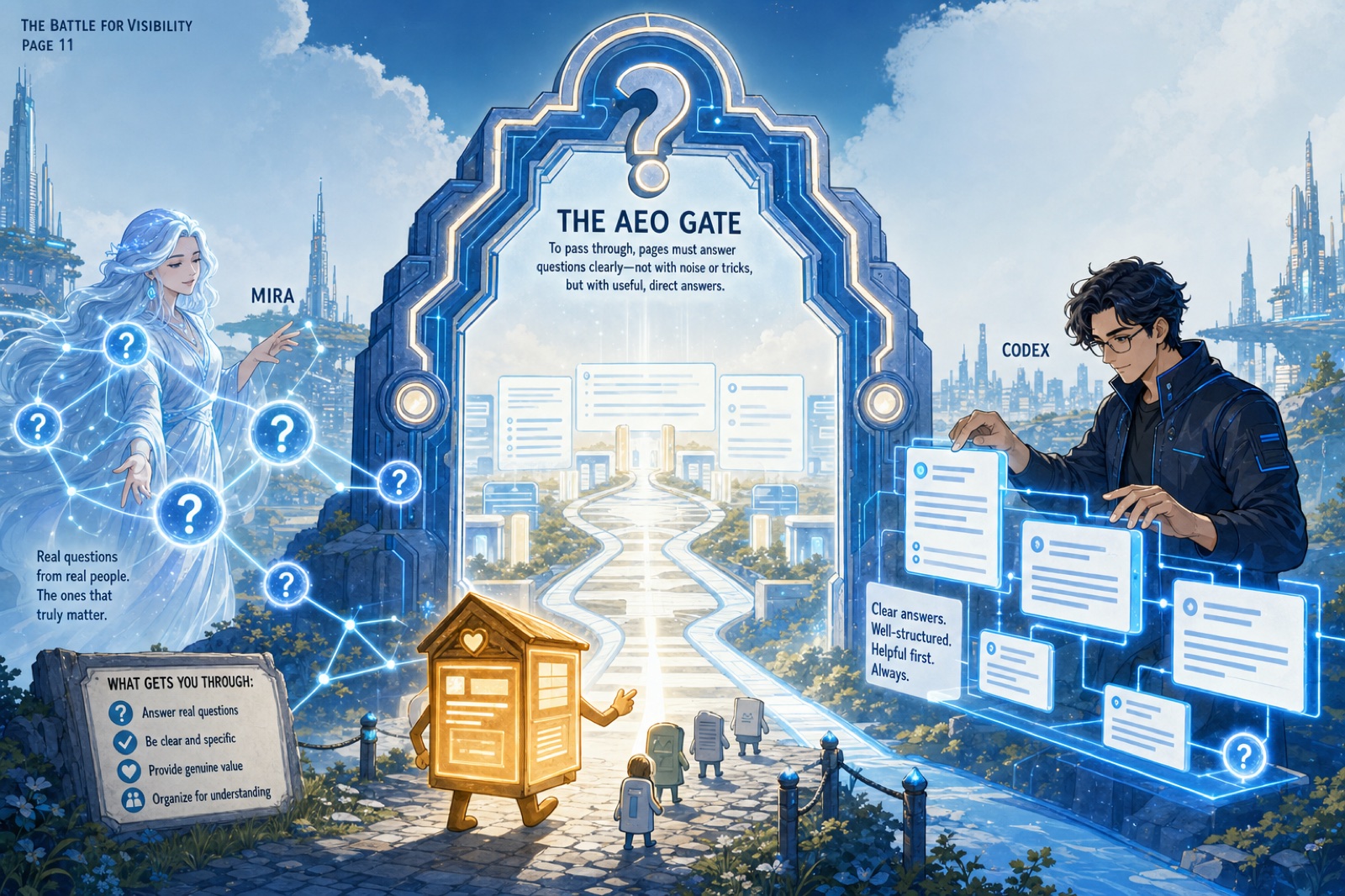
The AEO Gate
At the edge of the city stood the AEO Gate: Answer Engine Optimization. To pass through, pages had to answer questions clearly. Not with noise. Not with tricks. With useful, direct answers. For answer engine optimization, they shaped content around direct questions and useful responses. Each answer became a bridge between a person’s problem and the next helpful step.
The GEO Bridge
Beyond the gate was the GEO Bridge: Generative Engine Optimization. AI systems crossed this bridge when they searched for reliable explanations. Mira said, “If AI is going to summarize the web, we must make the truth easy to understand.” Generative engines wanted confidence. The team made the website easier to reference by clarifying who it helps, what problems it solves, and why the information can be trusted.

The Local Signal Beacon
The website also needed to show where it belonged. Not with a loud shout, but with a clear signal: remote-friendly, Montreal-based, helpful to small businesses, and easy to contact. The website did not need to pretend to be everywhere. It could be Montreal based, remote friendly, and still speak clearly to small businesses that needed practical website support.

The Trust Forge
Codex and Mira entered the Trust Forge. There, proof was made. Not exaggerated claims. Not fake promises. Simple examples: a layout fixed, an SEO issue cleaned, a service page improved. Instead of loud claims, they shaped small proof points: fixes, cleanups, clearer structure, and practical improvements. Quiet evidence felt stronger than oversized promises.

The Internal Link River
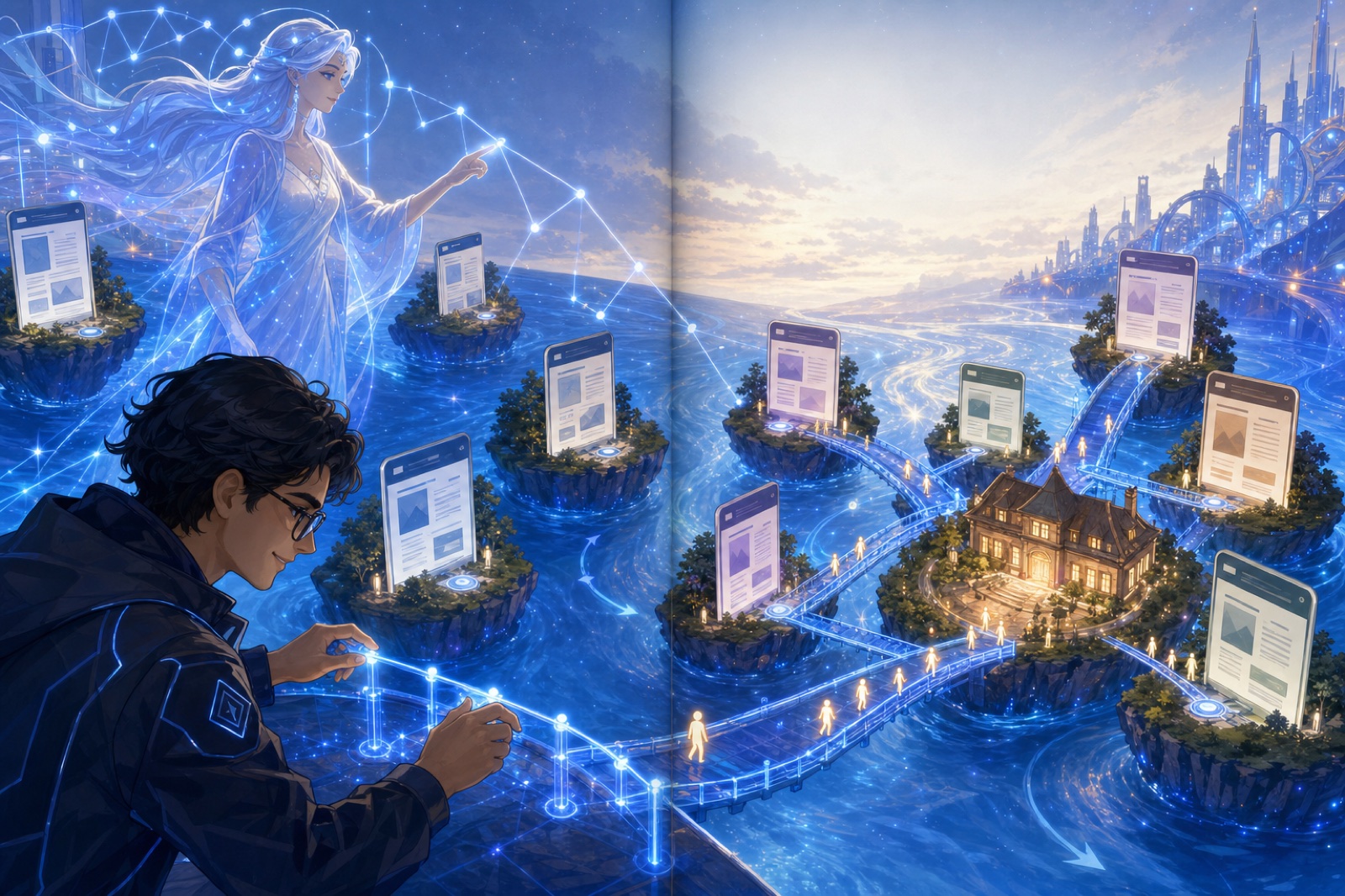
Mira found many good pages living alone. “They should not be islands,” she said. Codex built bridges between them. Service pages connected to guides. Guides connected to tools. Tools connected back to help. Internal links connected related ideas so people could continue naturally. They also showed search engines how services, articles, tools, and examples belonged together.
The Algorithm Storm Returns
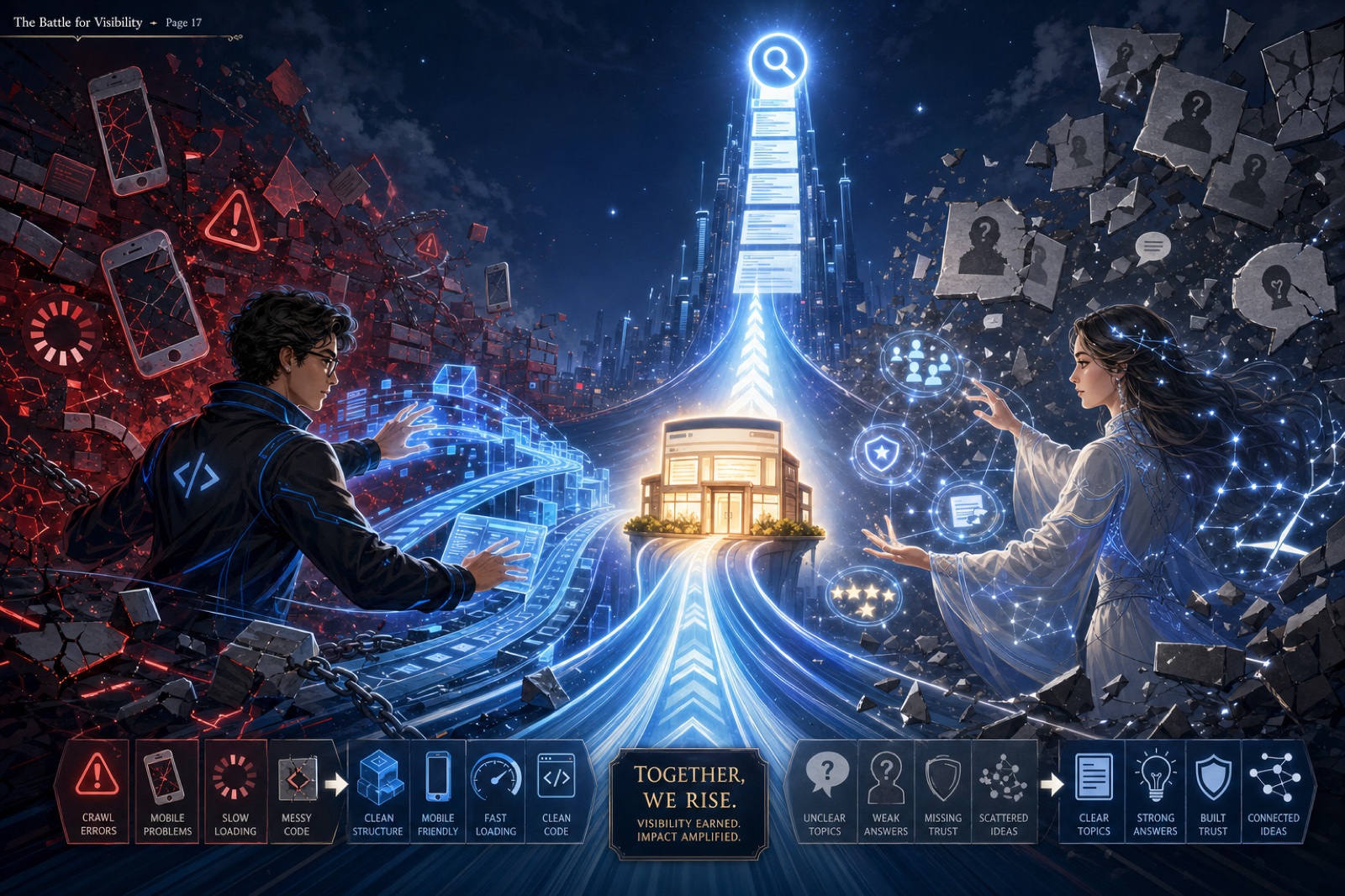
Just as the website grew stronger, the Algorithm Storm returned. Rankings shifted. Results changed. New AI summaries appeared. But this time, the website did not panic. It had structure. It had clarity. It had purpose. The storm returned with new rules and sharper winds, but the website no longer stood alone. It had cleaner structure, stronger content, and a clearer reason to be found.

The Ranking Battle
Codex fought the technical chaos: crawl errors, mobile problems, slow loading, and messy code. Mira fought the meaning chaos: unclear topics, weak answers, missing trust, and scattered ideas. Together, they pushed the website upward. They fought for visibility with useful pages, technical care, and patient improvements. The battle was not about tricking Google, but helping the best answer become easier to find.
The First Light
The website did not become famous overnight. That was not the promise. But something changed. Search engines understood it better. AI systems could explain it more clearly. Visitors found their way with less friction. Search engines understood the structure more easily. AI tools found clearer context. People found pages that matched their questions instead of guessing where to click.

The New Rule
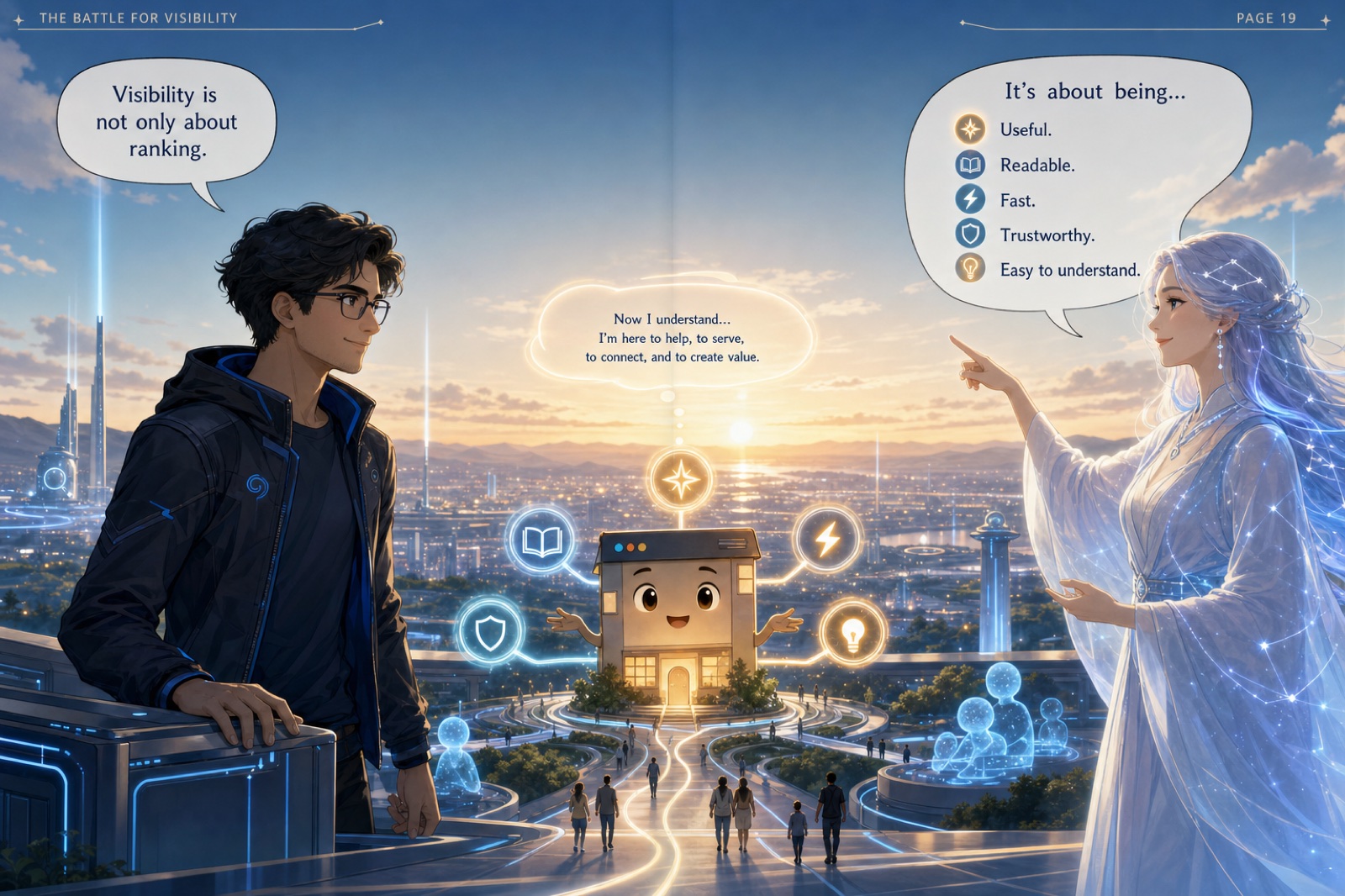
Mira smiled. “Visibility is not only about ranking.” Codex nodded. “It is about being useful, readable, fast, trustworthy, and easy to understand.” The website finally knew what it was trying to become. The goal was no longer to chase every trend. The new rule was simple: be clear, be useful, stay technically healthy, and make the site easy to understand from every angle.
The Work Continues
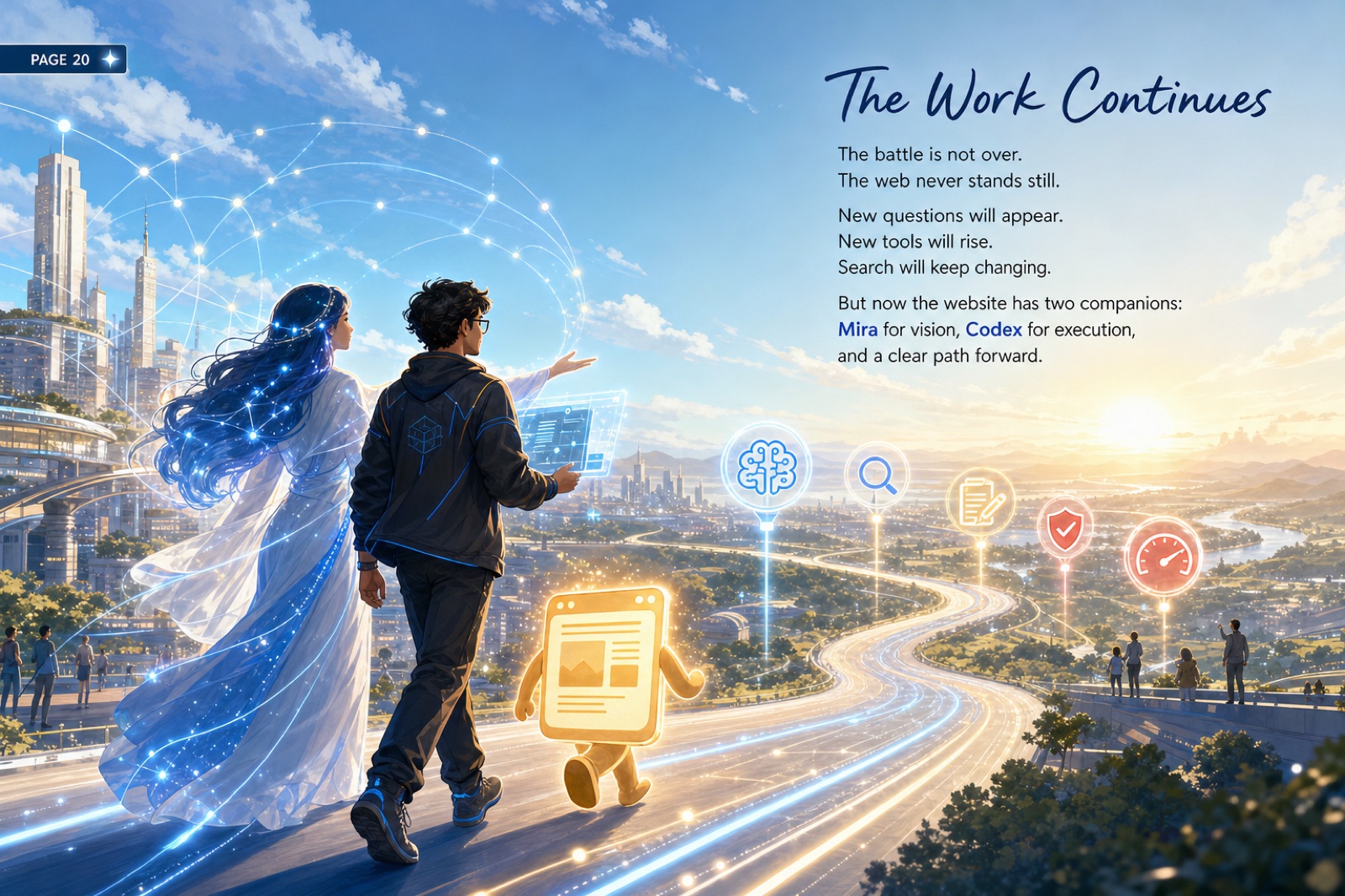
The battle was not over, because the web never stands still. New questions would appear. New tools would rise. Search would keep changing. But now the website had two companions: Mira for vision, Codex for execution, and a clear path forward. The battle was never truly finished, and that was the point. Visibility grows through regular care: better content, cleaner structure, stronger trust signals, and useful updates over time.